Starting or buying a business can strengthen your financial future, but qualifying for a mortgage…
Can a Construction Loan Cover Both the Lot and the Cost to Build?
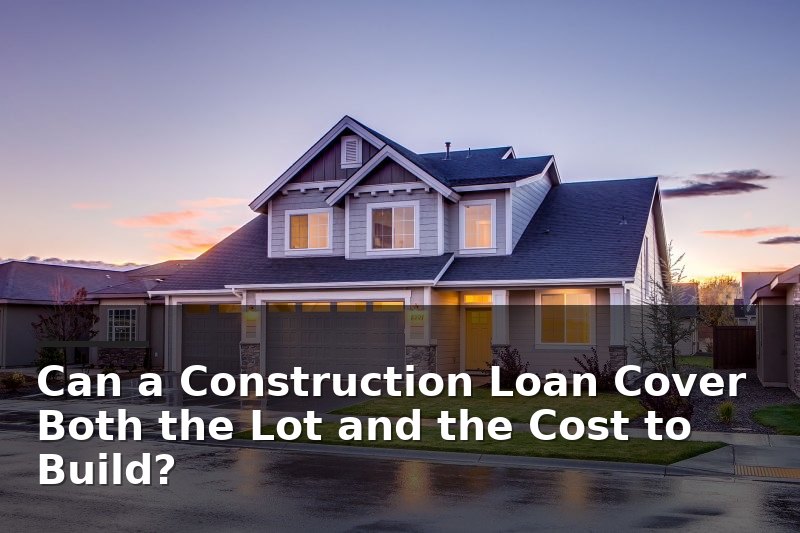
Buying land and building a home can be exciting, but financing two major costs at the same time can feel complicated. A construction loan can often cover both the purchase of the lot and the cost to build, provided the project, builder, budget, and completed property meet the lender’s guidelines. In this guide, we’ll explain how the financing works, what lenders review, and what borrowers should expect from application through completion.
Key Takeaways
- Coverage: A construction loan may finance the land purchase, construction costs, permits, professional fees, and other approved project expenses.
- Requirements: Lenders commonly review the borrower’s finances, builder qualifications, plans, budget, timeline, and projected completed value.
- Funding: Construction funds are typically released in stages as verified work is completed.
- Structure: The loan may close once and convert into permanent financing, or construction and permanent financing may close separately.
- Best For: This structure may fit borrowers purchasing a buildable lot or using land they already own for a new home.
At MOR Lending (NMLS# 1992934), we help borrowers evaluate the full project — not just the price of the land or the estimated construction cost. The structure matters because the lender has to understand how the pieces work together, how much cash or equity is involved, and what the property should be worth after construction is complete.
Quick Answers
- Can one loan buy the land and fund construction? Often, yes. The lender must offer a construction program that permits lot acquisition and approve the full project.
- What if we already own the lot? Existing land equity may count toward the borrower’s required investment, depending on the lender, current value, liens, and program guidelines.
- Do we receive all construction funds at closing? Usually not. Funds are commonly held in a construction account and released through scheduled draws.
- Can we use any contractor? The builder generally must satisfy the lender’s experience, licensing, insurance, financial, and documentation standards.
How a Construction Loan Can Finance the Lot and the Build
A construction loan is built around the total project. That may include the lot purchase, site preparation, labor, materials, permits, architectural work, and other costs accepted by the lender.
The lender does not look at the land and home as unrelated expenses. It reviews the transaction based on the full acquisition cost, the construction budget, and the property’s expected value once the home is finished.
The loan amount is commonly limited by both the total project cost and the appraised value of the completed home. The exact calculation varies by program and lender. This is why a detailed budget and a well-supported appraisal matter before construction begins.
If You Are Buying the Lot
The lot purchase can often be included in the construction closing. Part of the loan proceeds goes toward acquiring the land, while the remaining approved funds are placed into a controlled construction account.
You may still need to bring funds to closing. The amount depends on the land price, construction cost, completed value, credit profile, available assets, and lender guidelines.
If You Already Own the Lot
Land you already own may create useful equity. For example, if the lot has no debt and its current appraised value is higher than what you paid, the lender may recognize some or all of that value within the transaction.
Land equity may reduce the amount of additional cash needed, but it does not automatically replace every borrower contribution requirement. The lender will confirm ownership, current liens, acquisition history, and appraised value before determining how the equity can be used.
One-Close vs. Two-Close Construction Financing
Construction financing is commonly structured as either a one-close loan or a two-close process. Neither structure is automatically right for every project. The better fit depends on the program, borrower profile, property, and long-term financing plan.
| Feature | One-Close Construction Loan | Two-Close Construction Loan |
|---|---|---|
| Closings | Construction and permanent financing are arranged through one closing. | The construction loan closes first, followed by a separate permanent mortgage. |
| Qualification | Qualification for the permanent phase is generally completed before construction begins. | The borrower may need to qualify again when the permanent loan is arranged. |
| Rate Structure | The permanent financing terms may be established at the initial closing, subject to program structure. | Permanent loan terms are generally based on the market and borrower profile at the second closing. |
| Flexibility | Simplifies the transition but may offer fewer choices after construction starts. | May provide more permanent loan choices but creates another transaction and qualification step. |
A one-close structure can reduce the uncertainty of arranging another mortgage after the home is built. A two-close structure may provide more flexibility, but the borrower assumes the risk that income, credit, property value, or market conditions could change before permanent financing is completed.
What Costs May Be Included?
Eligible costs vary, but a construction budget may include:
- The purchase price of the lot
- Existing debt secured by land already owned
- Site clearing, grading, and utility connections
- Building materials and contractor labor
- Architectural, engineering, and survey work
- Building permits and approved municipal fees
- Required inspections during construction
- Approved contingency reserves
- Certain interest or carrying costs, if permitted by the program
Items outside the signed construction contract may not qualify. Furniture, loosely documented upgrades, and expenses unrelated to completing the property are commonly excluded. Every cost should be identified before closing so the lender can determine what is financeable and what must be paid separately.
How the Construction Draw Process Works
Construction loan proceeds are not typically released to the builder all at once. The lender uses a draw process to connect funding with verified progress.
- The builder completes an agreed phase of work. This could involve the foundation, framing, mechanical systems, or another milestone.
- A draw request is submitted. The request includes invoices, supporting documents, and any required lien releases.
- The work is inspected. An inspector confirms that the reported work has been completed and is consistent with the approved plans.
- The lender releases eligible funds. Payment is made according to the lender’s process and approved draw schedule.
- The project moves to the next phase. Draws continue until the home is complete and final requirements are satisfied.
The draw system protects the project by keeping loan disbursements aligned with completed work. It also means the builder needs enough operational capacity to work within the lender’s payment schedule.
What Lenders Review Before Closing
A construction loan requires more documentation than a standard purchase mortgage because the lender is evaluating both the borrower and a property that does not yet exist in completed form.
Borrower Qualification
The lender reviews credit, income, assets, existing obligations, and funds available for closing and reserves. Self-employed borrowers may need business and personal documentation in addition to standard income records.
Traditional guidelines don’t fit everyone. Depending on the program, borrowers with non-traditional income may have access to options such as bank statement loans, but construction eligibility, documentation, and terms vary significantly by lender.
Builder Approval
The builder may be asked for a license, insurance, references, project history, financial information, and a detailed contract. Some lenders also review the builder’s current workload and experience with similar homes.
Builder approval and borrower qualification are separate decisions. A financially qualified borrower may still need to select a different builder if the proposed contractor does not satisfy the construction program’s standards.
Plans, Specifications, and Budget
The lender needs a clear picture of what will be built and how much it should cost. Final plans, detailed specifications, a signed building contract, and a line-item budget are commonly required.
Large allowances or missing costs can create problems later. A realistic budget gives the appraiser better information and reduces the chance that the project will run short of funds.
Completed-Value Appraisal
The appraiser evaluates the lot, plans, specifications, location, and relevant comparable properties. The result is an opinion of what the completed home should be worth.
In Miami-Dade, this analysis may require added attention to coastal construction, flood zones, insurance availability, wind mitigation features, and the luxury or high-cost nature of the property. Those issues can affect the budget and financing even when the land itself is already owned.
Construction Financing in Miami Requires Early Planning
Building in Miami, Coral Gables, Pinecrest, Key Biscayne, Coconut Grove, or other nearby communities can involve permitting, flood requirements, specialized insurance, and site-specific construction standards. A delay in one area can affect the entire schedule.
Condo-heavy areas can also make detached new construction comparisons less straightforward. The appraiser still needs credible market support for the completed home, especially when the design, lot, or expected price falls outside common neighborhood patterns.
For higher-value projects, a jumbo home loan may become part of the permanent financing strategy. Projects involving an existing structure rather than a ground-up build may be better evaluated through a rehab loan. The right path depends on what exists today, what work is planned, and how the property will be used after completion.
Common Risks and Tradeoffs
Construction financing gives borrowers a way to fund a home that has not been built yet. That flexibility comes with added moving parts.
- Cost overruns: Material changes, labor issues, design revisions, or site conditions can push the project above budget.
- Timeline extensions: Permitting, weather, inspections, and supply delays can extend the construction period.
- Appraisal risk: The completed value may not support the requested loan amount.
- Builder risk: Contractor performance directly affects draw timing, budget control, and completion.
- Permanent financing risk: With a two-close structure, the borrower may need to qualify again under future market and underwriting conditions.
This is where strategy matters. Creative financing without cutting corners means testing the budget, value, documentation, and exit plan before the project starts — not after a problem appears.
How to Prepare Before Applying
Start with the project, then work backward into the financing. We recommend gathering:
- The lot address, purchase contract, or current deed
- Information about any loan secured by the land
- Preliminary plans and construction specifications
- A detailed builder proposal and contract
- An estimated construction timeline
- Income, asset, and credit documentation
- A breakdown of cash already invested in the project
- Funds available for closing, reserves, and costs outside the loan
Pre-approval planning should account for more than the monthly payment. We also look at the land position, builder requirements, contingency plan, expected completed value, and permanent loan strategy. Current rates, fees, and program guidelines can change, so each item should be verified before contracts and plans are finalized.
Let’s Review the Full Project
A construction loan may cover both the lot and the cost to build, but the details determine whether the structure works. We’re here to help you compare one-close and two-close options, review the land and budget, and understand what the lender will need before construction begins.
Call, text, or email us to review your scenario and map out the next steps. We’ll help you look at the numbers clearly, prepare for pre-approval, and build the financing strategy around the project — not force the project into the wrong loan.
Frequently Asked Questions
Can a construction loan finance a teardown and new home?
It may, but the lender must approve the existing property, demolition plan, new construction budget, and completed value. Some projects may fit a construction program, while others may be evaluated under renovation financing.
What happens if the completed-value appraisal is lower than expected?
A lower appraisal may reduce the available loan amount or increase the borrower’s required contribution. The plans, budget, scope, or financing structure may need to be revised before closing.
Can a self-employed borrower qualify for a construction loan?
Yes, self-employed borrowers may qualify if they meet the applicable credit, income, asset, project, and builder guidelines. Documentation varies by program, and lender overlays may be more restrictive than the underlying program requirements.
Can contingency reserves be included in the construction budget?
Many lenders require or permit a contingency reserve to address eligible unexpected costs. The required amount, control of the funds, and treatment of unused money vary by lender and project.
What happens if construction runs over budget or past the deadline?
The borrower may need to cover unapproved overruns, request an extension, or provide updated project documentation. Extensions are not automatic, and additional costs or underwriting review may apply depending on the lender and reason for the delay.
This is educational and not financial advice. Loan programs and guidelines can change. Talk with a licensed mortgage professional about your specific scenario.

About the Author
Roy George
President at MOR Lending · NMLS #286565
MOR Lending serves markets across the U.S. and has helped thousands of clients/investors/families finance their new home purchase. We specialize in Self Employed, Investor, Veteran, first-time homebuyer and non traditional loan types.
Specializes in: Non QM, FHA, Construction
Licensed in: AZ, CA, CO, FL, GA, NC, SC, TN, TX

Related Posts