For self-employed borrowers in Miami, strong cash flow can be clear in the business but…
Conventional vs. Jumbo Mortgages: How to Choose
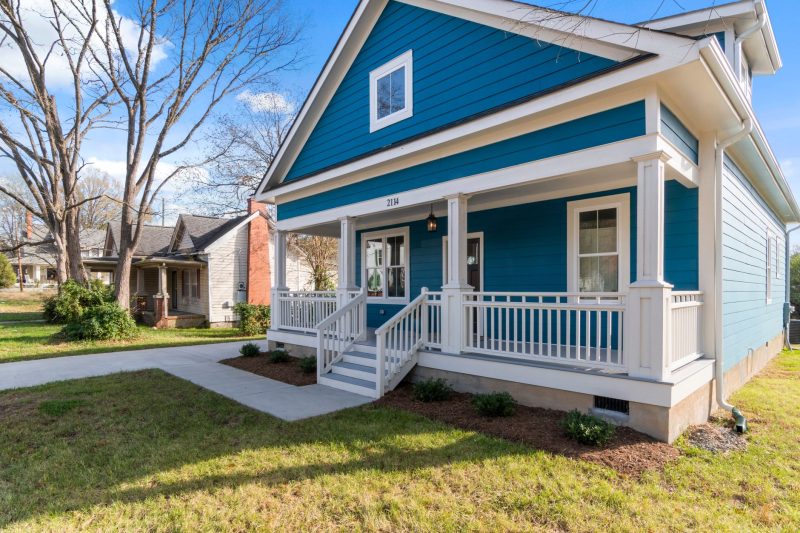
Buying your next home is exciting, but choosing the right mortgage can feel complicated when the loan amount approaches local lending limits.
A conventional conforming mortgage stays within current federal loan limits, while a jumbo mortgage finances an amount above the applicable limit and follows lender-specific underwriting guidelines.
In this guide, the team at MOR Lending (NMLS# 1992934) explains how both options work, where they differ, and what to review before financing your next home.
Key Takeaways
- Loan Limits: Conventional conforming loans stay within limits that vary by county and property type, while jumbo loans exceed those limits.
- Qualification: Jumbo mortgages commonly require stronger credit, more reserves, and deeper income and asset documentation.
- Down Payment: Both options offer different down payment structures, but jumbo requirements vary considerably by lender and scenario.
- Best Fit: The right choice depends on the loan amount, property, available assets, monthly payment, and long-term financial strategy.
Quick Answers About Conventional and Jumbo Loans
- Is a jumbo mortgage always more expensive? No. Jumbo pricing depends on market conditions, credit, down payment, property type, and lender guidelines. It should be compared using the full payment and cost structure.
- Are conventional and conforming the same thing? Not exactly. Conventional means the loan is not government-insured, while conforming means it follows the standards and loan limits used by Fannie Mae or Freddie Mac.
- Which mortgage usually requires more money down? Jumbo loans often require more borrower investment, but available options vary. Some conventional programs allow down payments as low as 3% for qualified borrowers.
- Can the loan program change during the mortgage process? It may be possible if the loan amount, qualifications, or transaction changes. A program change can affect pricing, documents, appraisal requirements, and closing timing.
What Is a Conventional Conforming Mortgage?
A conventional conforming mortgage is a home loan that is not insured by a government agency and stays within the applicable conforming loan limit. These loans are generally structured to meet Fannie Mae or Freddie Mac guidelines.
Conforming loan limits are updated periodically and can vary by county, property type, and number of housing units. Certain high-cost markets may have higher limits than standard areas. That matters when comparing homes in places such as Dade, Broward, and Palm counties or other higher-cost markets across Florida.
Conventional financing can be used for a primary residence, second home, or investment property, subject to program requirements. Options may include adjustable-rate terms or a fixed-rate mortgage, where the principal and interest portion of the payment remains consistent for the life of the loan.
Mortgage insurance may be required when the down payment is below a certain level. The cost varies based on credit, loan-to-value ratio, occupancy, and other risk factors. Unlike some government-backed mortgage insurance structures, conventional private mortgage insurance may eventually be removed when specific requirements are met.
What Is a Jumbo Mortgage?
A jumbo mortgage is a nonconforming loan with a balance above the current conforming limit for the property’s county and unit count. Because the loan cannot be delivered through the standard conforming structure, the lender or investor sets its own requirements.
That does not mean every jumbo program works the same way. One lender may focus heavily on reserves. Another may allow a different debt-to-income calculation or property type. Documentation standards, appraisal reviews, and down payment expectations can also vary.
Jumbo financing is commonly considered for higher-priced homes, move-up purchases, beach-city properties, and new construction. It may also be relevant in markets such as Miami, Orange County, Los Angeles, Greater Phoenix, Dallas-Fort Worth, Charleston, Atlanta, and Greater Denver.
Our jumbo home loan overview provides additional information about how these loans may be structured.
Conventional vs. Jumbo Mortgage Comparison
| Feature | Conventional Conforming | Jumbo |
|---|---|---|
| Loan Amount | Within the applicable conforming limit | Above the applicable conforming limit |
| Guidelines | Generally follows Fannie Mae or Freddie Mac standards | Set by the lender or loan investor |
| Down Payment | Some qualified borrowers may have options starting at 3% | Often higher, depending on the loan amount and borrower profile |
| Cash Reserves | May be required based on the overall file | Commonly requires more months of documented reserves |
| Appraisal | Usually one appraisal, subject to findings and guidelines | May require additional review or a second appraisal |
| Mortgage Insurance | May apply with a lower down payment | Structure varies by lender and down payment |
These are general differences, not universal rules. Rates, fees, loan limits, and qualification standards change. Current information should always be verified based on the county, property, occupancy, and full borrower scenario.
How Loan Limits Affect Your Decision
The purchase price alone does not determine whether a mortgage is conforming or jumbo. The key number is the final loan amount after the down payment is applied.
For example, a higher-priced home could still use conforming financing if the buyer makes a large enough down payment to keep the loan within the applicable limit. On the other hand, a smaller down payment could push the same purchase into jumbo territory.
That creates an important planning decision. Is it better to put more money down and stay conforming, or preserve liquidity and use jumbo financing?
There is no automatic answer. We look at the cost of financing, available cash, reserve requirements, future property plans, and the borrower’s comfort with the monthly payment. The goal is not to force the transaction into a particular loan category. The goal is to structure it correctly.
What Jumbo Underwriting Reviews More Closely
Jumbo underwriting usually takes a deeper look at the complete financial picture. Because the loan amount is larger and the guidelines are not standardized across every lender, small details can carry more weight.
Credit History
Jumbo programs commonly expect stronger credit and a well-established payment history. The exact standard varies by lender, loan amount, occupancy, and property type.
Credit is not just a score. Underwriters may also review the age of accounts, recent inquiries, revolving balances, mortgage history, and significant credit events.
Income Stability
Salaried borrowers generally provide employment and income documentation. Self-employed borrowers may need business and personal tax returns, year-to-date financial statements, business bank statements, or other records depending on the program.
Traditional guidelines don’t fit everyone. For borrowers whose tax returns do not reflect their full cash flow, certain non-QM options may use bank statements or assets to evaluate the ability to repay. Those programs are different from standard jumbo financing and come with their own terms, documentation, and pricing.
Assets and Reserves
Cash reserves are funds remaining after the down payment and closing costs are paid. Jumbo lenders commonly want to see that the borrower has enough documented liquidity to cover a certain number of future housing payments.
Retirement funds, brokerage accounts, deposit accounts, and other eligible assets may be considered, although lenders can apply different rules to how those funds are counted. Large deposits and recently transferred funds may need to be documented.
Property and Appraisal
Higher-value properties can be more difficult to compare because fewer similar sales may be available. This is especially relevant for custom homes, luxury properties, waterfront homes, acreage, and new construction.
A jumbo lender may require an appraisal review or a second appraisal, depending on the loan amount and property. That can add time to the process, so the appraisal strategy should be discussed early.
How to Choose Between Conventional and Jumbo Financing
The right decision starts with the complete transaction — not one interest rate, one payment, or one guideline. We recommend comparing the options in a clear sequence.
1. Confirm the Applicable Loan Limit
Check the current conforming limit for the property’s county and number of units. Limits can change, and high-cost county rules may differ from standard limits.
2. Calculate the Expected Loan Amount
Subtract the planned down payment from the purchase price. Then account for whether closing costs will be paid in cash, covered through permitted credits, or handled through another acceptable structure.
3. Compare Total Cash Needed
Look beyond the down payment. Include closing costs, prepaid taxes and insurance, required reserves, and funds needed after closing. A structure that uses every available dollar may create unnecessary pressure later.
4. Review the Full Monthly Payment
Compare principal, interest, property taxes, homeowners insurance, association dues when applicable, and mortgage insurance if required. In Florida, property insurance and flood insurance can materially affect the housing payment and should be researched early.
5. Evaluate Long-Term Flexibility
Consider how long the property may be held, whether renovations are planned, and how much liquidity should remain available. A lower loan balance may reduce the payment, while preserving assets may support other financial priorities.
This is where strategy matters. Creative financing without cutting corners means comparing the complete structure, documenting it correctly, and understanding the tradeoffs before moving forward.
When a Conventional Mortgage May Make Sense
A conventional conforming mortgage may be worth considering when:
- The final loan amount falls within the applicable conforming limit.
- The borrower wants standardized underwriting guidelines.
- A lower down payment structure is important.
- The property fits common conforming eligibility standards.
- The borrower wants to compare several widely available term options.
Conforming does not automatically mean easier, cheaper, or better. Income, credit, assets, occupancy, and property eligibility still matter. The advantage is often predictability — the guidelines are generally more standardized across the market.
When a Jumbo Mortgage May Make Sense
A jumbo mortgage may be worth considering when:
- The needed loan amount exceeds the current conforming limit.
- The borrower wants to preserve more cash instead of making a larger down payment solely to stay conforming.
- The borrower has strong documented income, credit, and reserves.
- The property is in a higher-cost market where larger balances are common.
- A lender-specific jumbo program aligns better with the complete financial profile.
Some jumbo borrowers have straightforward salaries. Others own businesses, receive variable compensation, or hold substantial assets. The documentation strategy should match how income and liquidity are actually structured.
Build the Financing Strategy Before Making an Offer
A basic prequalification may not be enough when the loan amount is close to the conforming limit or the file includes complex income. Before making an offer, we want to understand the purchase range, down payment choices, reserves, property type, and likely underwriting path.
We also want to identify potential timing issues. Tax returns may require additional analysis. Business funds may need documentation. A jumbo appraisal may take longer. New construction can involve builder, completion, and property review requirements.
Early planning creates options. Waiting until the file is under contract creates pressure.
We invite you to call, text, or email us to review your scenario, compare conventional and jumbo options, and understand the next steps. We can also help you build a pre-approval plan around the property range, expected loan amount, and documentation needed for underwriting.
Frequently Asked Questions
Can a self-employed borrower qualify for a jumbo mortgage?
Yes, self-employed borrowers may qualify when income, credit, assets, and the property meet the program guidelines. Documentation may include tax returns, business records, year-to-date financial statements, and evidence that the business can support the income used.
Does a jumbo mortgage require two appraisals?
Not always. A second appraisal or additional valuation review may be required based on the loan amount, property, lender, and findings from the original appraisal.
Can a VA loan finance an amount above the conforming limit?
A qualified veteran or eligible borrower may be able to use VA financing for a larger loan amount, subject to entitlement, lender requirements, and the complete transaction. VA loans follow their own rules and are not conventional jumbo mortgages, even when the balance is above the conforming limit.
How are reserve requirements calculated for jumbo loans?
Reserves are commonly measured using a certain number of months of the total housing payment. The required amount and eligible asset types vary based on the lender, loan balance, number of financed properties, occupancy, and overall borrower profile.
Can a high-priced home still use a conforming mortgage?
Yes. The mortgage category is based on the loan amount, not just the purchase price, so a larger down payment may keep the balance within the applicable conforming limit. The property and borrower must still meet conventional eligibility requirements.
This is educational and not financial advice. Loan programs and guidelines can change. Talk with a licensed mortgage professional about your specific scenario.

About the Author
Roy George
President at MOR Lending · NMLS #286565
MOR Lending serves markets across the U.S. and has helped thousands of clients/investors/families finance their new home purchase. We specialize in Self Employed, Investor, Veteran, first-time homebuyer and non traditional loan types.
Specializes in: Non QM, FHA, Construction
Licensed in: AZ, CA, CO, FL, GA, NC, SC, TN, TX

Related Posts