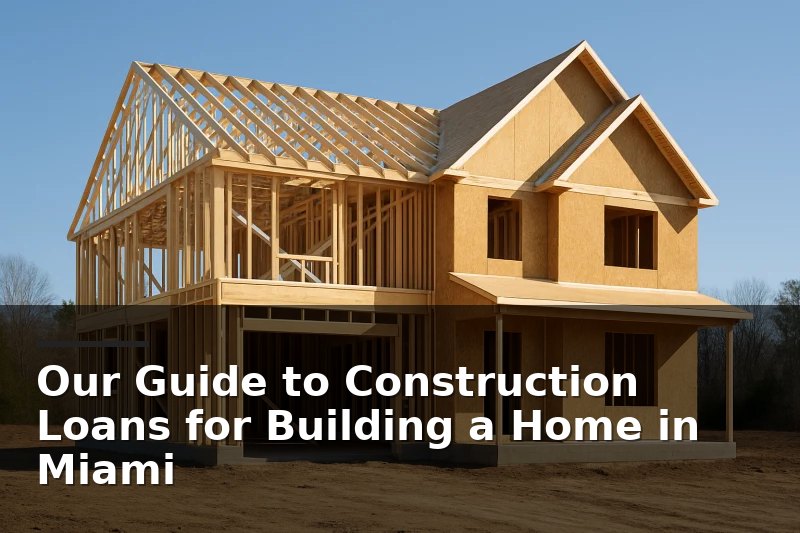
Building a custom home gives you control over the final result, but financing the land,…
Can You Use a Construction Loan to Buy Land and Build a Home?

By Roy George, President of MOR Lending
Buying land and building a home can be exciting, but coordinating the lot purchase, construction costs, and permanent mortgage can feel overwhelming.
Yes, a construction loan can finance the purchase of land and the cost of building a home, provided the property, builder, plans, budget, and borrower meet the lender’s guidelines.
In this guide, we’ll explain how these loans work, what lenders review, how funds are released, and what borrowers should expect before construction begins.
Key Takeaways
- Purpose: A construction loan may cover the land purchase, building costs, permits, labor, materials, and other approved project expenses.
- Requirements: Lenders typically review credit, income, available funds, building plans, the construction budget, and the qualifications of the builder.
- Funding: Construction money is generally released through scheduled draws instead of being paid to the borrower all at once.
- Timeline: The process often takes longer than a standard home purchase because the land, plans, builder, appraisal, and budget must all be reviewed.
- Best For: This structure may fit borrowers who want to purchase a buildable lot and construct a primary residence or eligible second home.
Quick Answers
- Can the loan pay for both the lot and construction? Yes. If the program allows it, one loan may include the land purchase and approved building costs.
- What if we already own the land? The lender may count eligible lot equity toward the required contribution, depending on the current value, existing liens, and program rules.
- Will there be one closing or two? A construction-to-permanent loan commonly uses one closing, while a standalone construction loan requires separate permanent financing later.
- Can construction begin before the loan closes? Usually not. Starting work early can create title, lien, appraisal, and reimbursement issues.
At MOR Lending (NMLS# 1992934), we help borrowers review the entire project before financing is structured. That means looking beyond the land price and understanding the plans, builder contract, contingency funds, closing costs, and long-term mortgage payment.
This matters because a build is not financed the same way as a completed home. The lender is funding a property that does not fully exist yet — and every part of the transaction has to support the finished result.
How a Construction Loan Can Finance Land and Building Costs
A construction loan uses the land and future home as collateral. At closing, part of the loan proceeds may be used to purchase the lot. The remaining construction funds are held by the lender and released as the work is completed.
Approved expenses may include:
- The purchase price of the land
- Site preparation and foundation work
- Labor and building materials
- Permits and approved professional fees
- Utility connections
- Required inspections
- An approved construction contingency
Not every project expense is automatically eligible. Furniture, movable appliances, landscaping upgrades, unusual site improvements, and changes made after closing may be limited or excluded. The lender will review the budget line by line before finalizing the loan amount.
Construction-to-Permanent vs. Standalone Construction Loans
The two main structures handle the permanent mortgage differently. That difference affects closing costs, rate planning, documentation, and the risk of needing to qualify again.
| Feature | Construction-to-Permanent | Standalone Construction |
|---|---|---|
| Closings | Typically one closing for construction and permanent financing | Construction closes first; permanent financing closes later |
| After Completion | The loan converts or modifies into the permanent mortgage | A separate mortgage pays off the construction balance |
| Qualification Risk | Usually reduces the need for a completely separate qualification process | Borrower may need to qualify again under future guidelines and market conditions |
| Flexibility | Keeps construction and long-term financing together | May provide more choice when selecting permanent financing later |
A one-time-close structure can simplify the process, but it may offer fewer options than arranging the construction and permanent loans separately. A two-close structure can provide flexibility, but it also creates another closing and exposure to future rates, property values, income changes, and lending guidelines.
Borrowers comparing permanent mortgage structures can review our home loan options. Projects above current conforming loan limits may also require a jumbo home loan structure.
What Lenders Review Before Financing the Project
Borrower Qualifications
Lenders commonly review credit history, income stability, current debts, available funds, and financial reserves. They also calculate the proposed housing payment using the permanent loan terms or another payment required by the program.
Self-employed borrowers may need business and personal tax returns, year-to-date financial statements, bank records, and other supporting documents. Traditional guidelines don’t fit everyone. Some borrowers may explore bank statement loans or other Non-QM options, but construction availability under those programs varies significantly by lender.
The Land
The lot must be suitable for the proposed home and acceptable as collateral. Lenders may review zoning, legal access, utilities, flood considerations, environmental concerns, surveys, and whether the parcel can legally support the planned construction.
In Miami-Dade, site review can be especially important. Coastal conditions, flood zones, wind requirements, elevation, insurance availability, and local permitting can affect the budget and timeline. A build in Key Biscayne may present different considerations than one in Pinecrest, Coral Gables, or a less coastal part of the county.
The Builder
Many construction lenders require a licensed and insured builder with relevant experience. The builder may need to provide references, financial information, licenses, insurance documents, and a record of completed projects.
Owner-builder projects are more difficult to finance because the lender takes on additional completion and cost-control risk. Some programs do not allow them at all, while others apply stricter requirements.
Plans, Specifications, and Budget
The lender needs enough detail to understand what is being built and how much it should cost. That commonly includes architectural plans, specifications, a signed building contract, a line-item budget, and a construction schedule.
A vague allowance or incomplete budget can delay the review. The lender and appraiser need to identify the materials, size, layout, features, and expected completed condition of the home.
How the Appraisal Works Before the Home Exists
A construction appraisal estimates the property’s value as if the approved home were already completed. The appraiser reviews the land, plans, specifications, contract, and comparable completed properties.
The lender then evaluates the project using the completed appraised value, total cost, or a combination of both. If the appraisal is lower than expected, the borrower may need to reduce the project cost, revise the plans, or contribute additional funds.
This can be a significant issue in custom construction. A feature may be expensive to build without adding the same amount to the appraised value. Personal value and market value are not always the same — and the lender has to underwrite the market value.
How Construction Draws Work
A draw is a scheduled release of loan funds after a defined stage of construction is completed and inspected. Instead of giving the entire construction budget to the builder at closing, the lender controls the funds throughout the project.
The draw process commonly follows these steps:
- The builder completes a stage of work. This could include the foundation, framing, mechanical systems, drywall, or final completion.
- A draw request is submitted. The builder provides the required forms, invoices, or supporting documents.
- The work is inspected. An inspector confirms the percentage of completion and checks that the requested funds align with completed work.
- Title or lien documentation is reviewed. The lender may require lien waivers or other evidence that contractors and suppliers are being paid.
- Approved funds are released. Payment may go to the builder, title company, or another approved party.
Borrowers often make interest payments based on the amount drawn rather than the full construction commitment. The exact payment structure varies by lender and program, so it should be reviewed before closing.
Can Land Equity Replace Part of the Cash Contribution?
If the land is already owned, its eligible equity may count toward the borrower’s contribution. The lender will consider the appraised land value, how long it has been owned, what was paid for it, and whether any liens remain.
For example, land owned free and clear may create usable equity in the transaction. If the property has an existing loan, that balance generally has to be included in the new financing or paid through another acceptable source.
Equity treatment is program-specific. Lenders may use the current value, documented cost, or another calculation based on how and when the property was acquired. We review this early because lot equity can materially change the financing structure.
Common Construction Loan Challenges
Cost Overruns
Material changes, labor costs, design revisions, and site problems can push a project beyond its original budget. Lenders generally require an approved contingency, but the borrower may still be responsible for costs beyond the available loan funds.
Construction Delays
Weather, permitting, inspections, supply issues, and contractor scheduling can extend the build. Construction loans have completion deadlines, and extensions may require additional review or fees.
Changes After Closing
Changing the floor plan, materials, square footage, or contract price can affect the appraisal and loan. Significant changes usually need lender approval before work moves forward.
Insurance and Property Eligibility
Insurance can influence qualification and monthly payment, especially in coastal and high-cost markets. Wind coverage, flood insurance, builder’s risk insurance, and the future homeowner’s policy should be evaluated early — not after the project is already underway.
Construction Loans Are Different From Renovation Loans
A construction loan is generally used to build a new home on vacant land or substantially complete a ground-up project. A renovation loan finances improvements to an existing property.
If the structure already exists and the goal is to repair or modernize it, a rehab loan may be the more appropriate path. The distinction matters because the appraisal, permits, contractor requirements, and draw process can differ.
How to Prepare Before Making an Offer on Land
The strongest planning happens before the land contract is signed. Creative financing without cutting corners starts with a complete review of the property and project.
- Confirm that the parcel is buildable for the intended home.
- Review zoning, access, utilities, flood conditions, and permitting requirements.
- Get an initial construction budget from a qualified builder.
- Estimate soft costs that may not appear in the builder’s base price.
- Discuss permanent financing and the expected future payment.
- Leave room for changes, delays, and expenses outside the approved loan.
- Make the land contract dependent on appropriate financing and property review when advised by your real estate and legal professionals.
As of 2026, construction guidelines still vary widely by lender. Agency or program requirements establish one layer of the review, while individual lenders may add overlays for credit, reserves, builders, property types, and project size.
We don’t look at a construction loan as one transaction. We look at the land, the build, and the permanent mortgage as one complete strategy — because each decision affects the next.
Review the Full Project Before You Commit
If you’re considering land in Miami, Miami Beach, Doral, Aventura, or another Miami-Dade community, we can help you review the scenario before you commit to the project. Call, text, or email us to compare structures, understand the documentation, and map out the next steps.
Pre-approval planning can also help identify the budget, builder requirements, land considerations, and permanent payment before a contract is signed. Rates, fees, program terms, and qualification requirements change, so every project should be evaluated using current information.
Frequently Asked Questions
Can a construction loan pay off an existing loan on the land?
It may. The existing land balance can sometimes be paid through the new construction financing, but the lender must review the lien, land value, total project cost, and available equity.
What happens if construction costs exceed the approved budget?
The borrower is generally responsible for costs that exceed the approved loan and contingency funds. Budget changes may also require lender review, updated documentation, or a revised appraisal.
Can we use any contractor to build the home?
Not necessarily. Construction lenders commonly review the contractor’s license, insurance, experience, financial capacity, references, and proposed contract before accepting the builder.
How are unused construction funds handled?
Unused funds are not usually paid to the borrower as cash. Depending on the loan structure, they may reduce the final principal balance or remain undisbursed under the lender’s closing and modification procedures.
Can a self-employed borrower qualify for a construction loan?
Yes, self-employed borrowers may be eligible if they meet the program’s income, credit, asset, reserve, and project requirements. Documentation varies, and some alternative-income programs have limited construction options or additional lender overlays.
This is educational and not financial advice. Loan programs and guidelines can change. Talk with a licensed mortgage professional about your specific scenario.

About the Author
Roy George
President at MOR Lending · NMLS #286565
MOR Lending serves markets across the U.S. and has helped thousands of clients/investors/families finance their new home purchase. We specialize in Self Employed, Investor, Veteran, first-time homebuyer and non traditional loan types.
Specializes in: Non QM, FHA, Construction
Licensed in: AZ, CA, CO, FL, GA, NC, SC, TN, TX

Related Posts