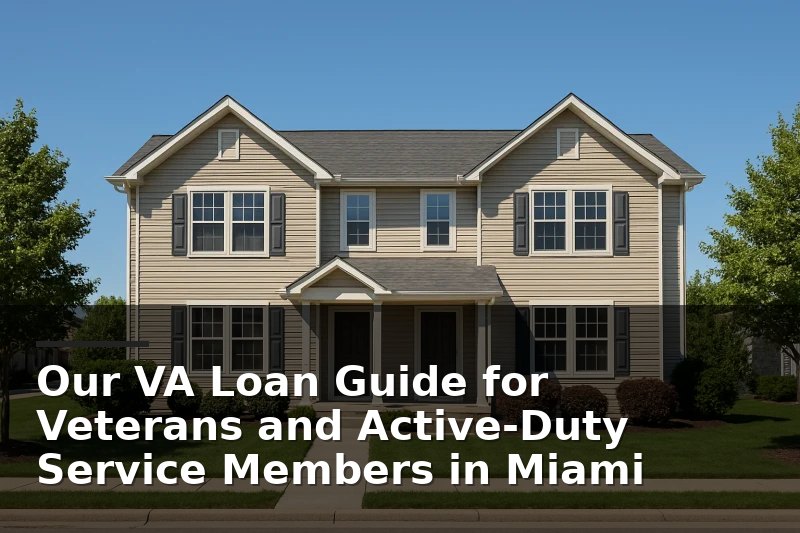
Buying a home in Miami with military benefits can be a strong financial move, but…
How We Help Veterans Understand VA Loan Eligibility and Property Requirements
Using a VA loan can create a strong path to homeownership, but the service rules, documentation, and property standards can feel unclear.
VA loan eligibility depends on qualifying military service and a valid Certificate of Eligibility, while the home must meet VA property standards and the lender’s underwriting requirements.
In this guide, we’ll explain how eligibility works, what the VA looks for in a property, and how we help veterans prepare for the process.
Key Takeaways
- Eligibility: Qualifying service and a Certificate of Eligibility establish access to the VA loan benefit, but they do not replace lender underwriting.
- Property: The home must meet VA Minimum Property Requirements and support the purchase price through a VA appraisal.
- Down Payment: Eligible borrowers may be able to finance a primary residence with no down payment, depending on entitlement, loan structure, and lender guidelines.
- Best For: VA financing is designed for eligible veterans, active-duty service members, and certain surviving spouses purchasing or refinancing a primary residence.
Quick Answers About VA Loans
- Does a Certificate of Eligibility mean the loan is approved? No. It confirms the borrower’s VA benefit status, while credit, income, assets, debts, and the property still need to be reviewed.
- Can a VA loan be used to purchase a condominium? Yes, but the condominium project generally must meet VA approval requirements.
- Is a down payment always required? VA loans commonly allow eligible borrowers to purchase with no down payment, but entitlement, appraisal results, lender guidelines, and the purchase price can affect the structure.
- Does the VA appraisal replace a home inspection? No. The appraisal evaluates value and VA property standards; an inspection gives the buyer a broader review of the home’s condition.
At MOR Lending (NMLS# 1992934), we help veterans separate three issues that are often grouped together: benefit eligibility, mortgage qualification, and property eligibility. They connect — but they are not the same decision.
That distinction matters. A borrower may have full VA eligibility but still need to document income, address a credit issue, or choose a property that meets program requirements. We review the complete picture early so the strategy is clear before a contract creates pressure.
What Determines VA Loan Eligibility?
VA loan eligibility is based primarily on the borrower’s service history and discharge status. Veterans, active-duty service members, National Guard members, Reserve members, and certain surviving spouses may qualify under different service rules.
The required service period can vary based on when and how someone served. Rather than relying on a general online checklist, we help borrowers obtain and review their Certificate of Eligibility, commonly called a COE.
The Certificate of Eligibility
The COE shows whether the Department of Veterans Affairs recognizes the borrower as eligible for the home loan benefit. It may also show available entitlement and whether the borrower is exempt from the VA funding fee.
In many cases, we can request the COE electronically. Some files require additional records, such as discharge documents, a statement of service, or other service documentation.
A COE confirms benefit eligibility — it does not confirm final loan qualification. The lender still evaluates the borrower’s ability to repay, credit profile, occupancy plan, assets, and the property being financed.
Entitlement and Prior VA Loan Use
VA entitlement is the amount of benefit available to support the loan. A veteran may have full entitlement, remaining entitlement, or entitlement tied to an existing or previous VA loan.
Prior use does not automatically prevent another VA purchase. The answer depends on what happened to the previous property, whether the prior loan was paid off, whether entitlement was restored, and how much entitlement remains.
This is where preparation matters. We review the COE, current obligations, and proposed purchase price together — not as separate pieces.
How Lenders Evaluate a Veteran’s Mortgage Qualification
The VA establishes the core program framework, but the mortgage lender completes the underwriting. Lenders may also have overlays, which are additional requirements beyond the minimum VA guidelines.
Most reviews include:
- Credit history and recent payment patterns
- Stable and documentable income
- Monthly debts and housing expenses
- Residual income after major obligations
- Funds needed for closing and required reserves, if applicable
- Primary-residence occupancy
Residual income is a key part of VA underwriting. It measures the income remaining after taxes, housing expenses, debts, and certain ongoing obligations. This helps the underwriter evaluate the borrower’s complete financial position instead of relying only on a debt-to-income ratio.
VA Loans for Self-Employed Veterans
Self-employed borrowers can use VA financing, but the documentation may be more involved. The lender generally needs to establish that the business income is stable, ongoing, and sufficient for the proposed payment.
That review may include personal and business tax returns, year-to-date profit-and-loss statements, balance sheets, business bank statements, and verification that the business remains active. Exact requirements vary based on the business structure and lender.
Traditional guidelines don’t fit everyone. Still, VA income must be documented under applicable program and lender standards. We look at the file early, identify what the underwriter is likely to need, and build the documentation plan before deadlines get tight.
What Properties Can Be Purchased With a VA Loan?
A VA loan is generally used to finance a property the borrower intends to occupy as a primary residence. It is not designed for a vacation home or a property purchased strictly for investment.
Common property types may include:
- Single-family homes
- VA-eligible condominium units
- Certain manufactured homes that meet program and lender standards
- Two- to four-unit properties when the borrower occupies one unit
- New construction that meets VA and lender requirements
Borrower eligibility and property eligibility must both work. A veteran can qualify financially while the property does not qualify — or the property can meet VA standards while the borrower’s file still needs additional documentation.
VA Minimum Property Requirements Explained
VA Minimum Property Requirements, or MPRs, are designed to confirm that the home is safe, structurally sound, and sanitary. They are not a demand that every home be new or fully updated.
The VA appraiser may evaluate areas such as:
- Structural condition
- Roof condition and remaining usefulness
- Heating, electrical, and plumbing systems
- Water supply and sewage disposal
- Access to the property
- Potential safety hazards
- Wood-destroying insect concerns where applicable
- Drainage or moisture issues that may affect the structure
Cosmetic issues alone do not always create a VA problem. Older flooring, dated cabinets, or worn finishes may not affect eligibility. Peeling paint, exposed wiring, an active roof leak, or a major health and safety concern can require correction.
What Happens When the Appraiser Identifies Repairs?
If the VA appraisal identifies an MPR issue, the report will usually describe the required correction. The buyer and seller can then decide whether the repair will be completed within the contract terms.
Required repairs are commonly completed before closing and may need to be reinspected. In limited situations, a lender may allow another structure, but that depends on the repair, loan program, lender policy, and current guidelines.
VA financing is not automatically the right match for a property needing major rehabilitation. Buyers considering significant repairs may also want to review how a rehab loan handles renovation costs and property condition.
VA Appraisal vs. Home Inspection
| Review | Primary Purpose | What It Means for the Buyer |
|---|---|---|
| VA Appraisal | Evaluates market value and visible compliance with VA property standards. | Required for the VA loan, but limited in scope. |
| Home Inspection | Provides a broader evaluation of systems, components, and property condition. | Usually optional from the lender’s perspective, but valuable for informed decision-making. |
The appraisal protects the loan process. The inspection helps the buyer understand the home. We encourage borrowers to treat them as separate tools — because they answer different questions.
VA Property Considerations in Miami-Dade
Miami and the surrounding coastal communities create property questions that deserve early attention. Condominiums are common in Miami Beach, Brickell, Aventura, Sunny Isles Beach, and other condo-heavy areas, so project eligibility can become just as important as the individual unit.
We may need to review whether the condominium project is VA approved, whether insurance documentation is available, and whether the property meets lender requirements. Flood-zone status, wind coverage, homeowners insurance, and association documentation can also affect the total payment and the timeline.
In Coral Gables, Pinecrest, Coconut Grove, Key Biscayne, and other higher-cost areas, purchase prices may require a closer entitlement analysis. VA loans do not operate exactly like conventional conforming loans, but individual lenders may set their own maximum loan amounts or additional requirements.
We do not wait until the appraisal to ask these questions. We review property type, occupancy, entitlement, estimated insurance, and financing structure as early as possible.
VA Loan Costs and Funding Fees
VA loans often allow eligible borrowers to purchase without a down payment, but no down payment does not mean no closing costs. Borrowers may still have expenses for the appraisal, title services, insurance, prepaid taxes, and other permitted charges.
Many VA borrowers also pay a funding fee based on the transaction type, prior use of the benefit, and down payment. The fee is commonly financed into the loan, although the final structure depends on the transaction.
Certain eligible borrowers may be exempt from the funding fee. The COE and VA documentation help establish whether an exemption applies.
Rates, fees, lender requirements, and program rules can change. We verify the current guidelines and compare the complete cash-to-close and monthly-payment picture. Borrowers who want to compare VA financing with other structures can also review our broader home loan options and low down payment purchase options.
How We Prepare a VA Loan Before the Offer
We believe clarity creates confidence — and that starts before a property is under contract.
- Confirm the benefit. We obtain or review the COE and identify available entitlement.
- Review the financial file. We evaluate income, credit, assets, debts, and residual income under current guidelines.
- Build the payment. We include estimated taxes, homeowners insurance, flood insurance when applicable, and association dues.
- Review the property type. We identify condo approval, occupancy, condition, or appraisal issues that may affect the loan.
- Set expectations. We explain documentation, appraisal timing, closing costs, and the steps between contract and closing.
This is not about forcing every veteran into one program. It is about comparing the structure, understanding the tradeoffs, and choosing the financing that supports the borrower’s actual goals.
If you are planning a purchase in Miami, Miami Beach, Doral, Kendall, Hialeah, Miami Lakes, or another Miami-Dade community, we invite you to call, text, or email us. We can review your eligibility, compare available options, and map out the next steps for pre-approval planning.
Frequently Asked Questions
Can I use a VA loan again after using the benefit before?
Yes, prior use does not automatically prevent another VA loan. Eligibility depends on whether entitlement was restored, whether a prior VA loan remains open, and how much entitlement is available for the new purchase.
What happens if the VA appraisal requires repairs?
The repairs generally must be completed and verified before closing. The buyer and seller can address responsibility through the purchase contract, but the lender must confirm that all applicable VA property requirements are satisfied.
Can a self-employed veteran qualify for VA financing?
Yes, self-employment is permitted when income meets VA and lender documentation standards. The review commonly includes tax returns, business financial statements, and evidence that the income is stable and likely to continue.
Can I buy a two- to four-unit property with a VA loan?
A VA loan may finance an eligible multi-unit property when the borrower plans to occupy one unit as a primary residence. Property condition, appraisal support, rental-income treatment, reserves, and lender overlays can affect qualification.
How long does the VA loan process take?
The timeline depends on documentation, appraisal availability, property condition, title work, insurance, and lender capacity. A complete pre-approval and early property review can reduce avoidable delays, but timing varies by transaction.
This is educational and not financial advice. Loan programs and guidelines can change. Talk with a licensed mortgage professional about your specific scenario.

About the Author
Roy George
President at MOR Lending · NMLS #286565
MOR Lending serves markets across the U.S. and has helped thousands of clients/investors/families finance their new home purchase. We specialize in Self Employed, Investor, Veteran, first-time homebuyer and non traditional loan types.
Specializes in: Non QM, FHA, Construction
Licensed in: AZ, CA, CO, FL, GA, NC, SC, TN, TX

Related Posts