Using a VA loan can create a strong path to homeownership, but the service rules,…
Our VA Loan Guide for Veterans and Active-Duty Service Members in Miami
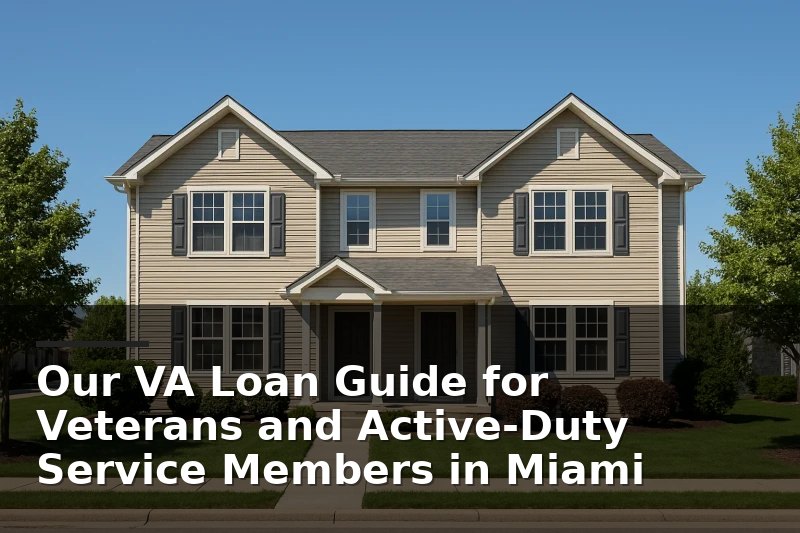
Buying a home in Miami with military benefits can be a strong financial move, but understanding eligibility, entitlement, property rules, and closing costs can feel overwhelming.
A VA loan is a mortgage backed by the U.S. Department of Veterans Affairs that can offer eligible borrowers zero-down financing, no monthly mortgage insurance, and flexible qualification guidelines.
In this guide, we’ll explain how VA loans work, what Miami buyers should expect, and how to build a clear financing strategy before making an offer.
Key Takeaways
- Eligibility: VA loans are available to eligible Veterans, active-duty service members, and certain surviving spouses who meet VA service requirements.
- Down Payment: Eligible borrowers with sufficient entitlement may be able to purchase with 0% down, subject to lender and property requirements.
- Property: The home generally must be a primary residence and meet VA minimum property requirements.
- Timeline: VA purchases often follow a timeline similar to other mortgages, but appraisal, condo, insurance, and documentation issues can affect closing.
- Best For: VA financing can fit eligible borrowers who want to preserve cash while purchasing an owner-occupied home.
At MOR Lending (NMLS# 1992934), we help eligible borrowers review the numbers behind a VA loan — not just the payment shown on a worksheet. That means looking at entitlement, cash to close, insurance, property eligibility, and the long-term impact of the financing.
Quick Answers About VA Loans in Miami
- Can a VA loan provide 100% financing? Often, yes. Eligible borrowers with sufficient entitlement may be able to finance the purchase without a down payment, although closing costs and other expenses may still require cash.
- Can VA loan benefits be used more than once? Yes. VA eligibility can be reused, and some borrowers may have remaining entitlement while another VA loan is still active.
- Does the VA set mortgage interest rates? No. Individual lenders set VA loan rates and pricing based on market conditions, loan details, and the borrower’s overall financial profile.
- Can a Miami condo be purchased with a VA loan? Yes, but the condominium project generally must meet VA requirements. Project status, insurance, finances, and association documents can all matter.
Who Is Eligible for a VA Loan?
VA eligibility is based primarily on military service. Veterans, active-duty service members, National Guard members, Reserve members, and certain surviving spouses may be eligible if the applicable service requirements are met.
The first major document is the Certificate of Eligibility, commonly called a COE. The COE confirms that the borrower has earned the benefit and shows information about available entitlement. It does not confirm that the borrower meets a lender’s credit, income, asset, or property requirements.
That distinction matters. VA eligibility and mortgage qualification are two separate decisions. The VA establishes the program framework, while lenders evaluate the borrower’s ability to repay and may apply additional underwriting standards known as overlays.
What Lenders Commonly Review
- Credit history and recent payment patterns
- Stable, documented income
- Monthly debts and housing expenses
- Residual income after major obligations
- Funds needed for closing costs and reserves, if applicable
- Occupancy and property eligibility
Traditional guidelines don’t fit everyone. A borrower with variable military income, a recent transition to civilian employment, or self-employment may need a more detailed review. The goal is to document the complete financial picture clearly — not force every income scenario into the same box.
How the VA Loan Benefit Works
The VA does not usually lend money directly to the homebuyer. Instead, a private lender funds the mortgage, and the VA provides a guaranty that reduces part of the lender’s risk.
That structure allows VA loans to offer several meaningful features:
- No required down payment in many cases: Borrowers with sufficient entitlement may be eligible for 100% financing.
- No monthly mortgage insurance: VA loans do not have the monthly mortgage insurance commonly associated with low-down-payment conventional or FHA financing.
- Flexible underwriting: VA guidelines consider residual income and the borrower’s full financial profile, not one number alone.
- Limited closing-cost rules: VA guidelines identify which costs borrowers may pay and how seller credits can be used.
- Reusable eligibility: The benefit may be restored or reused when applicable requirements are met.
These features do not remove underwriting. Income still needs to be supportable, credit still matters, and the property must meet program standards. Creative financing without cutting corners means using the benefit strategically while documenting the file correctly from the beginning.
VA Entitlement and Zero-Down Financing
VA entitlement is the amount of guaranty available to support an eligible borrower’s VA loan. It is not a cash benefit, and it is not the same as the loan amount.
Borrowers with full entitlement are generally not subject to a VA-imposed county loan limit. The lender may still establish a maximum loan amount based on income, debts, credit, assets, property value, and internal guidelines.
Partial entitlement can be more complicated. This may apply when a borrower has another active VA loan, previously experienced a VA-related loss, or has not restored entitlement after paying off an earlier loan. In those cases, the purchase price and current county limits may affect the required down payment.
This is especially relevant in Miami-Dade, where property values can push loan amounts higher. We review entitlement early because it can change the financing structure before a buyer signs a contract.
What Costs Come With a VA Loan?
Zero down does not always mean zero cash at closing. A VA buyer may still need funds for prepaid taxes, homeowners insurance, flood insurance when required, title-related expenses, inspections, and other permitted costs.
The VA Funding Fee
The VA funding fee is a one-time charge that helps support the VA loan program. The amount varies based on factors such as the type of transaction, prior use of the benefit, and down payment.
The fee can commonly be financed into the loan. Certain eligible borrowers are exempt based on VA rules, including some borrowers receiving qualifying service-connected disability compensation. Exemption status is generally reflected on the COE or verified through applicable VA documentation.
Seller Credits and Lender Credits
Seller credits may help cover certain closing costs, subject to the purchase contract, appraisal, and VA rules. Lender credits may also reduce upfront expenses in exchange for different loan pricing.
We compare these structures carefully. A lower cash-to-close figure can be helpful, but it needs to be evaluated alongside the interest rate, loan balance, monthly payment, and expected time in the property.
VA Property Requirements in Miami
The VA loan program evaluates both the borrower and the property. The home generally must be safe, structurally sound, sanitary, and suitable for residential use.
A VA appraisal serves two primary purposes: establishing an opinion of value and reviewing the property against VA minimum property requirements. It is not a home inspection. Buyers may still choose to obtain a separate inspection to evaluate the home’s condition in greater detail.
Miami Condominiums
Miami, Miami Beach, Brickell, Aventura, Sunny Isles Beach, and other nearby markets have a large concentration of condominium properties. For VA financing, the condominium project generally needs to have acceptable VA status before the unit can close.
Condo financing may require a review of:
- Project approval status
- Association insurance coverage
- Budget and financial information
- Pending litigation or structural concerns
- Special assessments
- Owner-occupancy or commercial-space considerations
Insurance is a major part of the review in coastal and condo-heavy communities. Wind coverage, flood requirements, master policies, and individual unit coverage can affect both eligibility and the final monthly housing expense.
Single-Family Homes and Multi-Unit Properties
A VA loan may finance an eligible single-family home or certain residential properties with multiple units, provided the borrower intends to occupy the property as a primary residence and all program requirements are met.
Potential rental income from additional units may be considered under applicable guidelines, but it must be documented correctly. Property condition, reserves, management history, and lender overlays may also affect the structure.
How VA Loans Compare With Other Mortgage Options
| Loan Type | Down Payment | Mortgage Insurance | Primary Consideration |
|---|---|---|---|
| VA | 0% may be available with sufficient entitlement | No monthly mortgage insurance; funding fee may apply | Military eligibility, entitlement, occupancy, and property requirements |
| FHA | Minimum commonly starts at 3.5% | Upfront and annual mortgage insurance generally apply | Property standards, loan limits, and mortgage insurance costs |
| Conventional | Some programs begin at 3% | May apply with a smaller down payment | Credit, income, conforming limits, and property guidelines |
VA financing is not automatically the right answer for every eligible borrower. We compare the total payment, cash required, funding fee, available seller credits, and long-term cost against other mortgage loan options.
Borrowers focused on preserving cash can also review the broader structure of low down payment purchase options. The right comparison depends on the property, credit profile, available assets, and financial goals.
Income Documentation for Active-Duty and Self-Employed Borrowers
Active-duty income may include base pay and qualifying allowances. Lenders typically review current earnings documentation, service information, and the expected continuity of income.
A change in duty station or an upcoming separation date may require additional documentation. The lender may need to understand where the borrower will live, whether current compensation will continue, and what verified income will be available after any transition.
Self-employed Veterans can also use VA financing, but business income requires a deeper review. Tax returns, business returns, profit-and-loss statements, balance sheets, and other records may be requested depending on the business structure and lender guidelines.
Gross business revenue is not the same as qualifying mortgage income. Underwriting generally evaluates taxable income, allowable adjustments, business stability, and whether the income is likely to continue. That is why pre-approval planning matters — especially before making an offer in a competitive segment of the Miami market.
A Clear VA Loan Process
- Confirm eligibility and entitlement. Obtain the COE and identify whether entitlement is full, partial, or needs restoration.
- Review income, credit, assets, and debts. Build a realistic purchase range based on the complete file.
- Estimate the full housing payment. Include principal, interest, property taxes, homeowners insurance, flood insurance when applicable, and association dues.
- Check the property early. Condo status, insurance, condition, and occupancy requirements should be reviewed before they become closing issues.
- Complete underwriting and the VA appraisal. Respond to documentation requests and address any property conditions.
- Review final terms before closing. Confirm the rate, payment, cash to close, funding fee treatment, and loan structure.
That process is built around clarity. We don’t want borrowers learning about entitlement, condo restrictions, or insurance costs after they are already under pressure from a contract deadline.
Build the Strategy Before You Make an Offer
A strong VA pre-approval is more than a letter. It should confirm eligibility, evaluate entitlement, review income, and account for the type of property being purchased.
In a luxury or high-cost market, the strategy may also include reviewing reserves, negotiating seller credits, and comparing a VA structure with conventional or jumbo financing. Rates, fees, and program requirements change, so every option should be verified using current guidelines and the details of the transaction.
If you are planning a purchase in Miami, Coral Gables, Doral, Key Biscayne, Pinecrest, Coconut Grove, Kendall, or another Miami-Dade community, we’re here to help. Call, text, or email us to review your scenario, compare options, and understand the next steps for VA pre-approval planning.
Frequently Asked Questions
How does the VA funding fee affect my loan?
The VA funding fee is a one-time program charge that varies by transaction and borrower circumstances. It can commonly be financed into the mortgage, while certain eligible borrowers may qualify for an exemption under VA guidelines.
Can active-duty housing allowances count as qualifying income?
Qualifying military allowances may be considered when they are properly documented and expected to continue. The lender will review current service records, earnings documentation, and any known changes that could affect the income.
What happens if the VA appraisal is lower than the purchase price?
The parties may renegotiate the price, challenge the valuation with relevant market information, restructure the financing, or decide not to proceed based on the contract terms. The available path depends on the appraisal, contract, entitlement, and borrower’s available funds.
Can a self-employed Veteran qualify for VA financing?
Yes, self-employed income may be used when it meets applicable stability, documentation, and continuity requirements. Underwriting generally reviews tax records, business performance, ownership structure, and the effect of business obligations on personal income.
How long does a VA purchase take to close?
A VA purchase can often close on a timeline similar to other mortgage programs, but the schedule varies by scenario. Appraisal conditions, condo reviews, insurance documentation, title work, and borrower response times can all affect the closing date.
This is educational and not financial advice. Loan programs and guidelines can change. Talk with a licensed mortgage professional about your specific scenario.

About the Author
Roy George
President at MOR Lending · NMLS #286565
MOR Lending serves markets across the U.S. and has helped thousands of clients/investors/families finance their new home purchase. We specialize in Self Employed, Investor, Veteran, first-time homebuyer and non traditional loan types.
Specializes in: Non QM, FHA, Construction
Licensed in: AZ, CA, CO, FL, GA, NC, SC, TN, TX

Related Posts