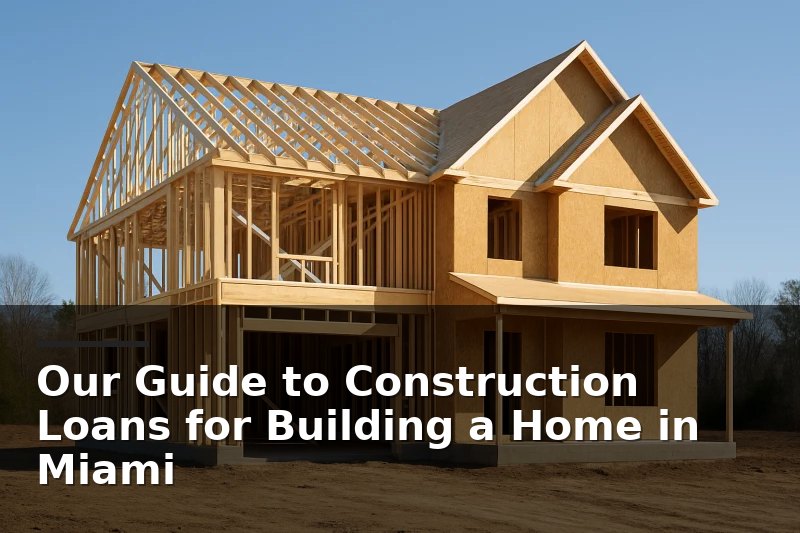
Building a custom home gives you control over the final result, but financing the land,…
Conventional vs. Non-QM Mortgages: Choosing the Right Loan When You’re Self-Employed
If you run your own business, you already know getting a mortgage isn’t always straightforward. **Conventional loans typically require standard proof of income, but Non-QM (Non-Qualified Mortgage) programs open new doors for borrowers with unique financial profiles.** In this guide, we’ll dig into how these loan types compare, why self-employed buyers often hit speed bumps, and how to map out your best fit — especially in markets like Miami, Dallas, and across Florida.
Key Takeaways
- Loan Options: Conventional mortgages follow standard documentation and underwriting; Non-QM loans allow more flexible ways to verify income and assets.
- Requirements: Conventional loans often require two years of tax returns; Non-QM programs may accept bank statements or asset-based documentation.
- Process: Most lenders can pre-approve within a few days; Non-QM loans may need extra documentation but move with similar speed.
- Best For: Self-employed buyers, investors, and anyone whose true income doesn’t show up on W-2 forms or traditional paperwork.
Quick Answers: Conventional vs. Non-QM for Self-Employed
- What is a conventional loan? A conventional loan is a mortgage that follows Fannie Mae or Freddie Mac standards for credit score, income, and documentation.
- What is a Non-QM loan? Non-QM stands for Non-Qualified Mortgage — programs that offer solutions for entrepreneurs, independent contractors, and others with non-traditional income.
- Do self-employed borrowers have to use Non-QM? Not always. If your taxes and income meet conventional guidelines, you may still qualify for standard financing.
- Why do self-employed buyers have more options now? The market has grown — lenders and investors have recognized that traditional guidelines don’t fit everyone, leading to flexible programs like bank statement loans and asset-based lending.
Understanding Conventional Mortgages for Self-Employed Buyers
Conventional loans are the backbone of mortgage lending in Dade, Palm, and Broward counties, and really, everywhere we lend. They’re built for predictability: fixed rates, standard down payment options, and the familiarity of guidelines set by Fannie Mae and Freddie Mac.
But these guidelines typically want to see two full years of federal tax returns, sometimes more. The focus is always on net taxable income — after deductions, write-offs, and business reinvestment. That’s where self-employed clients often feel the squeeze. Many businesses are healthy and growing, but your taxes might not tell the whole story.
If your documentation is clean and your adjusted gross income checks the boxes, a conventional loan can absolutely work — and we’ll guide you through that process with clarity and real numbers, not guesswork.
Where Non-QM Mortgages Come In
This is where the landscape opens up. Non-QM mortgages are built for scenarios where “normal” paperwork doesn’t capture your real financial picture. At MOR Lending (NMLS# 1992934), we help clients explore programs designed with entrepreneurs in mind.
Here are a few ways Non-QM loans get creative without cutting corners:
- Bank Statement Loans: Instead of using tax returns, borrowers can qualify with 12-24 months of business or personal bank statements. Lenders analyze your actual deposits — giving credit for the real cash flow in your business.
- Asset-Based Lending: Some programs allow you to qualify based on liquid assets (savings, investments) rather than monthly income. This is powerful for business owners and retirees with strong portfolios.
- Expanded Debt Ratios: Conventional debt-to-income caps are strict; Non-QM often considers a wider range, accounting for the complexity of today’s businesses.
What all these programs share is flexibility — but with responsible underwriting. There’s no room for shortcuts at MOR Lending. We’re focused on transparency, compliance, and making sure every loan fits the client for the long haul.
Comparing Documentation: Conventional vs. Non-QM
| Feature | Conventional Loans | Non-QM Loans |
|---|---|---|
| Income Documentation | Two years of tax returns (with full business schedules) | Bank statements, asset statements, or other custom verification |
| Down Payment | As low as 3% (for first-time buyers); varies by scenario | Typically higher minimums; guidelines vary |
| Interest Rates | Aligned with current market rates | Slightly higher than conventional, reflecting flexibility |
| Credit Score Requirement | Minimums vary by program; usually 620+ | Broader range accepted; varies more by lender |
| Loan Limits | Tied to county/area conforming limits | Often higher or unlimited, depending on the program |
When Does a Non-QM Mortgage Make Sense?
Non-QM isn’t for everyone — but if you’re a self-employed borrower, an investor with multiple properties, or just someone whose taxes don’t paint the real income picture, these programs are worth a close look. We often find success with:
- Entrepreneurs who reinvest heavily in their business
- Consultants, sales professionals, or contract workers with irregular income
- Borrowers with seasonal income or commissions
- Real estate investors seeking creative solutions across portfolio properties
It’s about matching underwriting to reality — not shoehorning you into something that only looks good on paper. Real estate wealth begins with the right financing strategy, and sometimes that means stepping outside the box — but never the rules.
Conventional vs. Non-QM: The Underwriting Mindset
Conventional lending is black and white: income, taxes, debt. Non-QM is about shades of gray. Both require thorough documentation, just in different forms. What you won’t find at MOR Lending is guesswork or overpromising. If we can build a case for a conventional approval, that’s your first stop. If the numbers don’t quite fit, we open the Non-QM toolbox — drawing on programs built specifically for modern business owners and investors.
How to Get Started: Pre-Approval & Planning
Whether you’re buying in Orlando, Atlanta, or Maricopa County, your first step is always a thorough review with a mortgage strategist. We’ll break down your full financial picture — including tax returns, bank statements, and assets. From there, we run your scenario through both conventional and Non-QM guidelines to compare side by side.
You’ll get numbers, not just advice. If you’re early in the process, pre-approval gives you clarity (and leverage) before you ever write an offer. Prepping in advance is especially important if you’re considering new construction or investments in competitive high-cost markets.
Why Work With a Specialist?
Conventional and Non-QM guidelines change, sometimes fast. That’s why it pays to work with an investor financing specialist who’s seen every twist — from the pandemic to rising rates and beyond. We keep up with evolving programs and educate our clients every step of the way. From Miami Beach to downtown Denver, clarity is what we promise. We move with urgency and get granular with your scenario, because that’s what strategy-driven lending is all about.
Ready to Review Your Options?
Whether you’re W-2, 1099, or somewhere in between, let’s lay out the pathway together. Call, text, or email us to walk through your scenario, compare programs, and get a plan for pre-approval — before the home search or the next investment move. Your financing deserves just as much strategy as your business.
Frequently Asked Questions
Can self-employed borrowers qualify for conventional loans?
Yes. If you can document consistent qualifying income on your tax returns, conventional loans are an option. However, deductions and write-offs can make qualifying numbers appear lower, so each situation needs a detailed review.
What if my tax returns don’t show my true income?
Non-QM options such as bank statement loans or asset-based lending may offer more flexibility. Lenders review deposits or assets rather than relying only on taxable income, making home financing possible for many business owners.
Are Non-QM loans riskier than conventional loans?
Non-QM loans are simply underwritten differently. They use flexible documentation but still follow responsible lending rules. The key is to work with an experienced team that focuses on long-term fit and strategy.
Do Non-QM loans have higher rates or larger down payments?
Non-QM programs may have slightly higher rates and larger minimum down payments to offset their flexible documentation. Terms vary by lender, property type, and borrower profile. Reviewing side by side with conventional options is crucial.
Is the pre-approval process different for Non-QM loans?
While the steps are similar, Non-QM pre-approval often involves reviewing alternative documents like bank statements or asset statements along with credit. Timelines are comparable to conventional loans, especially with a proactive lending team.
This is educational and not financial advice. Loan programs and guidelines can change. Talk with a licensed mortgage professional about your specific scenario.

About the Author
Roy George
President at MOR Lending · NMLS #286565
MOR Lending serves markets across the U.S. and has helped thousands of clients/investors/families finance their new home purchase. We specialize in Self Employed, Investor, Veteran, first-time homebuyer and non traditional loan types.
Specializes in: Non QM, FHA, Construction
Licensed in: AZ, CA, CO, FL, GA, NC, SC, TN, TX

Related Posts